
MedQuest Blog
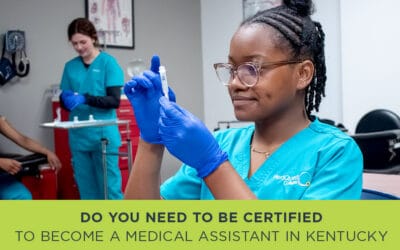
Do You Need to Be Certified to Become a Medical Assistant in Kentucky?
Kentucky does not generally require medical assistants to hold a state-issued license or national certification to work in the profession. However, individual healthcare employers may prefer or require national credentials, such as the Registered Medical Assistant...

How to Become a Vet Tech in Kentucky: KBVE Requirements
To become a Licensed Veterinary Technician (LVT) in Kentucky, you must graduate from an AVMA-accredited veterinary technology program that meets state requirements, pass the Veterinary Technician National Examination (VTNE), and apply for licensure through the...
Medical Assistant School vs. On-the-Job Training: What’s the Difference?
If you are considering a career as a medical assistant, you may be wondering whether you need to attend medical assistant school or if you can learn the job through on-the-job training. The main difference is how you develop your skills and prepare for the...

Associate Degree vs. Bachelor’s Degree in Health Sciences: What Changes When You Finish Your Degree?
What changes when you move from an associate degree to a bachelor’s degree in health sciences? The biggest difference is the level and scope of your education. An associate degree typically establishes foundational knowledge and prepares students for entry-level roles...
Dental Assisting Certificate vs Dental Assisting Diploma: What Is the Difference?
When comparing a dental assisting certificate vs dental assisting diploma, the main differences typically involve program length, curriculum, hands-on training, and the credentials awarded. Certificate programs are often designed as shorter, focused programs covering...

From Associate Degree to Bachelor’s Degree: How a Health Sciences Completion Program Works
A health sciences bachelor completion program gives eligible allied health professionals who already have an associate degree a pathway to earn a bachelor's degree without starting their college education over. Previously earned credits may apply toward the bachelor's...

What Do You Learn in Medical Assistant School?
Medical Assistant school typically teaches a combination of clinical, administrative, and professional skills. Students may study subjects such as anatomy, medical terminology, medical billing, medical records, clinical procedures, laboratory procedures, pharmacology,...

What Can You Do with a Bachelor’s Degree in Health Sciences?
For allied health professionals who already hold an associate degree, taking the next step in education can open new avenues within the medical field. Transitioning from a purely clinical or technical role into leadership, education, or community health requires a...

5 Surprising Specializations for Diagnostic Medical Sonographers
When most people think of medical ultrasound, they immediately visualize an expectant mother viewing an image of her unborn child. While obstetrics remains a well-known and vital application of ultrasound, it represents only a small portion of what ultrasound...