
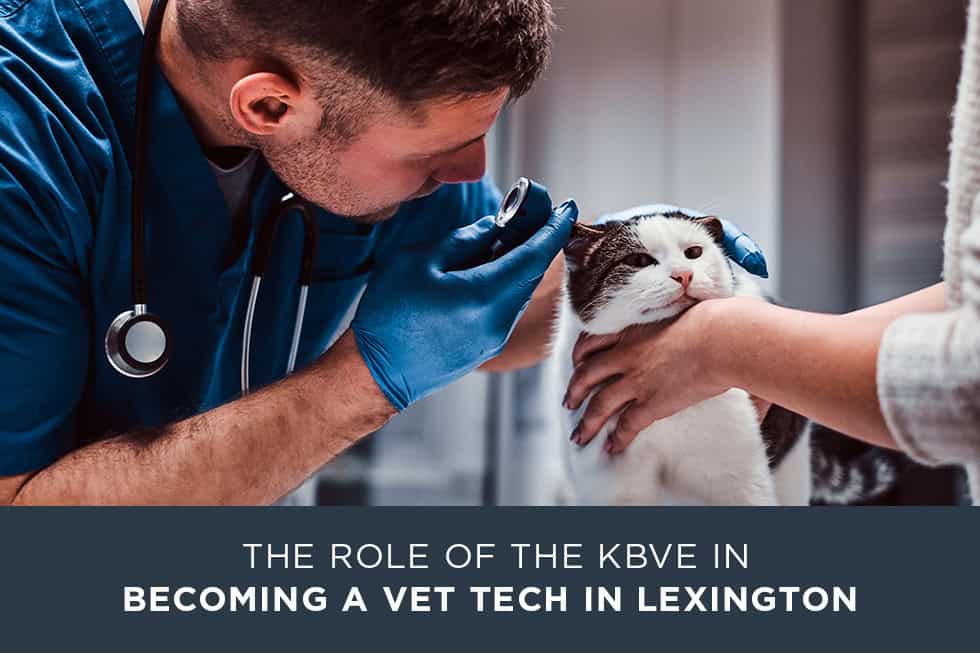
To become a Licensed Veterinary Technician (LVT) in Kentucky, you must graduate from an AVMA-accredited veterinary technology program that meets state requirements, pass the Veterinary Technician National Examination (VTNE), and apply for licensure through the Kentucky Board of Veterinary Examiners (KBVE). For students in Lexington, MedQuest College offers an AVMA-accredited Veterinary Technology Associate of Applied Science program that combines classroom instruction, laboratory learning, and clinical training to prepare students for the next steps toward becoming a veterinary technician.
If you want to turn your interest in animal care into a career, understanding the KBVE requirements early can help you plan your education and licensing process.
What Is the Kentucky Board of Veterinary Examiners (KBVE)?
The Kentucky Board of Veterinary Examiners is the state agency responsible for regulating veterinary professionals and overseeing licensure in Kentucky. The Board establishes licensing requirements, reviews applications, and helps ensure that licensed professionals meet the state’s standards for veterinary practice.
For aspiring veterinary technicians, the KBVE plays an important role in the process of becoming a Licensed Veterinary Technician. Completing your education is an essential step, but you must also meet the applicable examination and licensing requirements before practicing as an LVT in Kentucky.
The KBVE is located in Lexington, making it a relevant local resource for students exploring veterinary technology programs in the area. Its requirements apply statewide, not just to applicants who attend school in Lexington.
What Are the Requirements to Become a Licensed Vet Tech in Kentucky?
Becoming a licensed veterinary technician involves education, examination, and an application for licensure. Understanding each step can help you plan ahead.
1. Graduate From an AVMA-Accredited Veterinary Technology Program
Kentucky requires veterinary technician applicants to graduate with an associate or bachelor’s degree from an American Veterinary Medical Association (AVMA) Committee on Veterinary Technician Education and Activities (CVTEA)-accredited veterinary technology, technician, or nursing program.
MedQuest College offers an AVMA-accredited Veterinary Technology Associate of Applied Science program at its Lexington campus. The program combines classroom instruction with hands-on laboratory and clinical learning to help students develop knowledge and practical skills related to veterinary patient care.
Students study subjects such as animal anatomy, clinical laboratory procedures, anesthesia, patient preparation, and veterinary dentistry. These areas provide a foundation for understanding the responsibilities veterinary technicians may perform under a veterinarian’s supervision.
When comparing veterinary technology schools, review the program’s accreditation, curriculum, clinical learning opportunities, and how its graduates can pursue the VTNE and state licensure.
2. Pass the Veterinary Technician National Examination (VTNE)
The Veterinary Technician National Examination (VTNE) evaluates knowledge and skills relevant to veterinary technology. The examination covers areas of practice such as animal nursing, anesthesia, pharmacology, dentistry, laboratory procedures, and other clinical responsibilities.
Graduates of qualifying AVMA-accredited veterinary technology programs can apply through the American Association of Veterinary State Boards (AAVSB) for approval to take the VTNE.
At MedQuest College, coursework and laboratory experiences cover key areas of veterinary technology, giving students opportunities to build their knowledge throughout the program. Students should review current VTNE eligibility requirements, application deadlines, and testing windows as they approach graduation.
Passing the VTNE is a required step toward Kentucky LVT licensure, but it does not automatically issue a license.
3. Submit Your Application for Kentucky Licensure
After meeting the education and examination requirements, you must apply for licensure through the KBVE.
Applicants should use the Board’s current Application for Licensure as a Veterinary Technician and follow the checklist provided with the application. Depending on the application requirements, supporting documentation may need to come directly from the school or testing organization rather than from the applicant.
Review the latest instructions carefully to confirm the required documents, fees, and submission procedures. The Board must receive the required application components before it can review your file for licensure.
For current details, visit the KBVE Prerequisites for Licensure page and the Board’s Applications and Forms page.
How Do You Choose a Veterinary Technology Program in Lexington?
Choosing a veterinary technology program is an important step toward becoming an LVT. Look beyond the program title and consider whether the education aligns with Kentucky’s licensing requirements and your learning goals.
Here are a few things to evaluate:
- Accreditation: Confirm that the program meets the accreditation requirements applicable to Kentucky veterinary technician licensure.
- Hands-on learning: Look for opportunities to apply classroom knowledge in laboratory and clinical settings.
- Curriculum: Review the subjects covered, including animal anatomy, patient care, laboratory procedures, anesthesia, and dentistry.
- Program structure: Understand the program length, schedule, academic expectations, and total cost.
- Licensing preparation: Ask how the program prepares students to pursue the VTNE and understand the application process.
Explore Veterinary Technology at MedQuest College
MedQuest College’s Lexington Veterinary Technology program offers an Associate of Applied Science degree with classroom, laboratory, and clinical learning experiences. Students explore the scientific knowledge and practical responsibilities involved in veterinary patient care while preparing for the next steps in their professional education.
The curriculum includes topics such as animal anatomy, clinical chemistry, microbiology, anesthesia, patient preparation, and veterinary dentistry. These subjects help students build a foundation for working as part of a veterinary healthcare team.
If you are considering a veterinary technology program in Lexington, explore the MedQuest College Veterinary Technology program to learn more about the curriculum, program requirements, and available enrollment information.
What Is the Difference Between a Licensed Veterinary Technician and a Veterinary Assistant?
Veterinary technicians and veterinary assistants both contribute to animal care, but their education, credentials, and permitted responsibilities differ.
| Comparison | Licensed Veterinary Technician (LVT) | Veterinary Assistant |
| State credential | Holds a Kentucky license issued by the KBVE | Does not hold an LVT license solely by working as a veterinary assistant |
| Education | Must meet Kentucky’s veterinary technician education requirements for licensure | Kentucky does not require the same degree and licensing pathway for veterinary assistants |
| National examination | Must meet the applicable VTNE requirement for LVT licensure | The VTNE is not a requirement for the veterinary assistant role itself |
| Responsibilities | May perform authorized veterinary technology tasks under applicable laws and veterinarian supervision | May assist with animal handling, patient comfort, cleaning, and other support duties within applicable rules and workplace policies |
The exact duties assigned to either role depend on Kentucky law, the level of training, and the veterinary practice. Completing veterinary technology education and earning an LVT license establishes a different professional credential from working in an unlicensed assistant role.
For students who want to pursue the licensed veterinary technician pathway, an accredited veterinary technology program is an important starting point.
Frequently Asked Questions
What is the main role of the KBVE in becoming a vet tech?
The Kentucky Board of Veterinary Examiners regulates veterinary professionals in Kentucky. For veterinary technicians, the Board reviews licensure applications and issues LVT licenses to applicants who meet the applicable education, examination, and application requirements.
What are the requirements to become a licensed veterinary technician in Kentucky?
Applicants must graduate from an eligible AVMA CVTEA-accredited veterinary technology program, pass the VTNE, and submit a complete application to the KBVE. Applicants should review the Board’s current requirements to confirm the documentation and fees needed for their situation.
Is MedQuest College’s Veterinary Technology program AVMA-accredited?
Yes. MedQuest College offers an AVMA-accredited Veterinary Technology Associate of Applied Science program at its Lexington campus. Kentucky applicants should also review the KBVE’s current licensure requirements and confirm that their graduation and examination records meet the Board’s criteria.
Can I apply for my Kentucky LVT license before passing the VTNE?
A passing VTNE score is required for Kentucky veterinary technician licensure. Applicants should follow the KBVE’s current application instructions and examination procedures to understand when to submit the required materials.
Is the KBVE located in Lexington, Kentucky?
Yes. The Kentucky Board of Veterinary Examiners is located at 4047 Iron Works Parkway, Suite 104, Lexington, Kentucky. The Board oversees veterinary professional licensing across the Commonwealth.
Take the Next Step Toward Veterinary Technology Training
Understanding the KBVE requirements can help you plan the steps toward becoming a Licensed Veterinary Technician in Kentucky. From completing an eligible veterinary technology degree to passing the VTNE and submitting your licensing application, each step plays a role in the process.
MedQuest College’s AVMA-accredited Veterinary Technology Associate of Applied Science program in Lexington offers classroom instruction, laboratory learning, and clinical experiences for students interested in veterinary patient care.
Ready to learn more? Visit the MedQuest College Veterinary Technology program page to explore the curriculum, review program details, and request information about taking the next step toward your education.
Licensing requirements can change. Always consult the Kentucky Board of Veterinary Examiners for the latest requirements before applying for licensure.